Russian sage care information
Home » Trending » Russian sage care informationYour Russian sage care images are available in this site. Russian sage care are a topic that is being searched for and liked by netizens today. You can Get the Russian sage care files here. Download all free photos.
If you’re searching for russian sage care images information related to the russian sage care topic, you have come to the ideal blog. Our website always gives you suggestions for seeking the maximum quality video and image content, please kindly surf and locate more enlightening video content and graphics that match your interests.
Russian Sage Care. In warmer regions it may not die back much, if at all, during the winter months. You can do this by bringing them outdoors to a partially sunny and protected area for an hour on the first day, bringing them back inside, and increasing the time spent outside each following day by about an hour until they can. Plants should be spaced about 18 inches from one another. This plant is beautiful and very easy to maintain, making it perfect for everyone, including those without a green thumb.
 Russian Sage, Filigran From thetreefarm.com
Can i divide russian sage? When growing lavender and russian sage, keep in mind that these two plants require the same soil conditions. The plants should be watered well throughout the plant’s first growing season to ensure that they establish an extensive root system. This encourages new growth and a fresh flush of flowers. This is my favorite option for mature russian sage plants located at elevations under 7,000 feet. Propagate russian sage plants by dividing the clumps or.
Russian sage can be transplanted into the garden as soon as the risk of frost has passed.
It’s a good choice to grow near the ocean. In this article, we take a deep dive into the […] Being tall, it often requires support (either with stakes or a peony ring) if grown individually, lest it flop over. Planting & caring for russian sage. When growing lavender and russian sage, keep in mind that these two plants require the same soil conditions. But the primary care concern with these plants is pruning, which is optional.
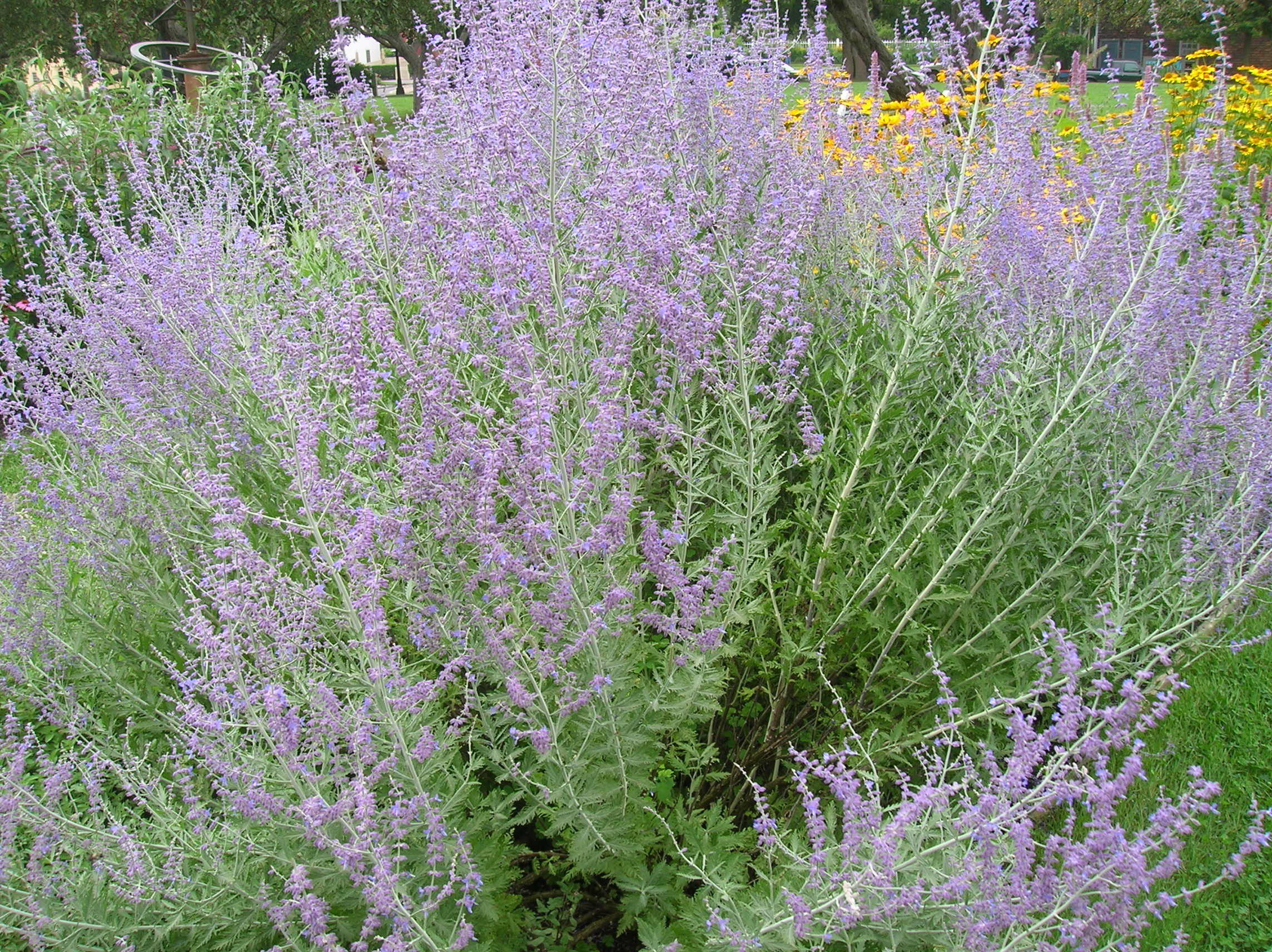 Source: gardeningwithcharlie.com
It is important to cut the foliage and stems back almost all the way to the soil in early spring, but leaving a few inches of growth above ground level. In warmer regions it may not die back much, if at all, during the winter months. Russian sage (perovskia) is a very good plant for containers, especially large ones. After plants become established, they tolerate drought without complaint and rarely need supplemental watering. Russian sage is a tough plant that needs little care.
Source: thetreefarm.com
This plant is beautiful and very easy to maintain, making it perfect for everyone, including those without a green thumb. It is important to cut the foliage and stems back almost all the way to the soil in early spring, but leaving a few inches of growth above ground level. Russian sage is hardy in zones 4 to 9. In warmer regions it may not die back much, if at all, during the winter months. To prevent flopping grow shorter varieties, stake or cage your plants or pinch back the growing tips when the plant is 1 foot tall.
 Source: jacksonandperkins.com
After plants become established, they tolerate drought without complaint and rarely need supplemental watering. In this article, we take a deep dive into the […] Russian sage can tend to flop, as the stems get long. Learn the two best techniques to cut back russian sage in spring. Cut all the stems to the ground.
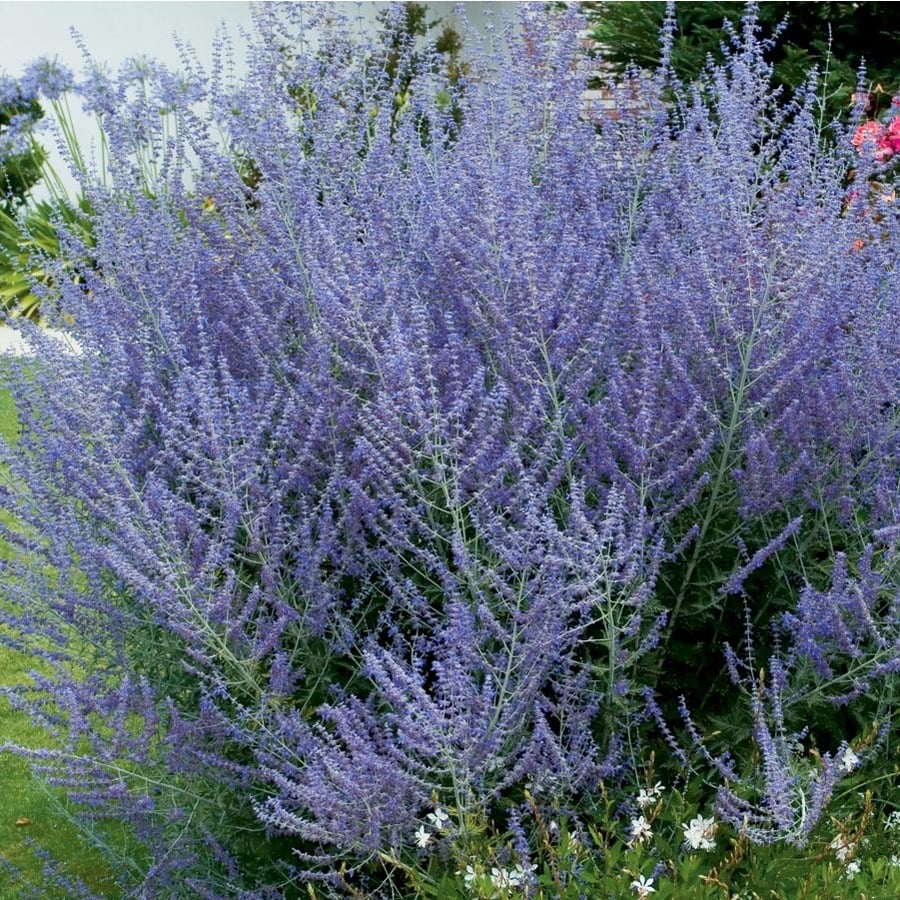 Source: lowes.com
You can do this by bringing them outdoors to a partially sunny and protected area for an hour on the first day, bringing them back inside, and increasing the time spent outside each following day by about an hour until they can. Cut all the stems to the ground. After plants become established, they tolerate drought without complaint and rarely need supplemental watering. The second aspect is mulching for winter, which can help protect the plant in colder zones. When growing lavender and russian sage, keep in mind that these two plants require the same soil conditions.
 Source: monrovia.com
Water regularly during the first growing season to establish a deep root system. This is my favorite option for mature russian sage plants located at elevations under 7,000 feet. One aspect of russian sage care is pruning. If you don’t prune russian sage, the plant will become very overgrown and woody, which doesn’t look very nice. The flowers are a magnet for pollinating insects.
 Source: pinterest.com.au
Catherine, horticulturist with colorado yard care, demonstrates how to prune russian sage t. Pruning is an important part of russian sage maintenance. Being tall, it often requires support (either with stakes or a peony ring) if grown individually, lest it flop over. It thrives in full sun. Both plants need plenty of sunlight and good drainage.
 Source: pinterest.com
If grown in masses, the plants help to support one another. This encourages new growth and a fresh flush of flowers. In fact, russian sage thrives in dry soil and rarely needs watering once established. Watering requirements for russian sage and lavender. It is important to cut the foliage and stems back almost all the way to the soil in early spring, but leaving a few inches of growth above ground level.
 Source: coloradoyardcare.com
To prevent flopping grow shorter varieties, stake or cage your plants or pinch back the growing tips when the plant is 1 foot tall. This plant is beautiful and very easy to maintain, making it perfect for everyone, including those without a green thumb. If grown in masses, the plants help to support one another. After plants become established, they tolerate drought without complaint and rarely need supplemental watering. Both plants need plenty of sunlight and good drainage.
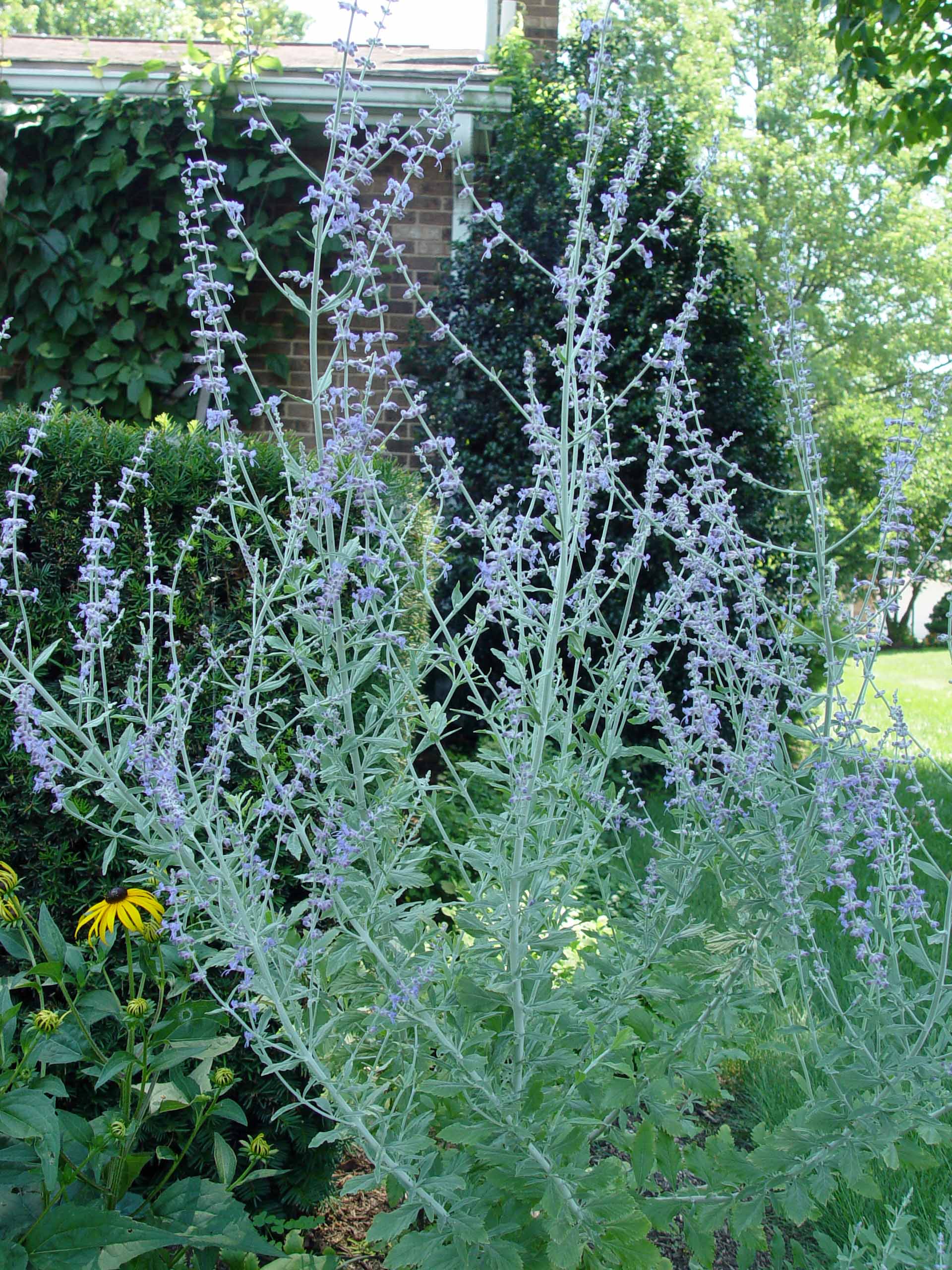 Source: georgeweigel.net
Watering requirements for russian sage and lavender. Propagate russian sage plants by dividing the clumps or. The flowers are a magnet for pollinating insects. Russian sage can tend to flop, as the stems get long. Russian sage can be transplanted into the garden as soon as the risk of frost has passed.
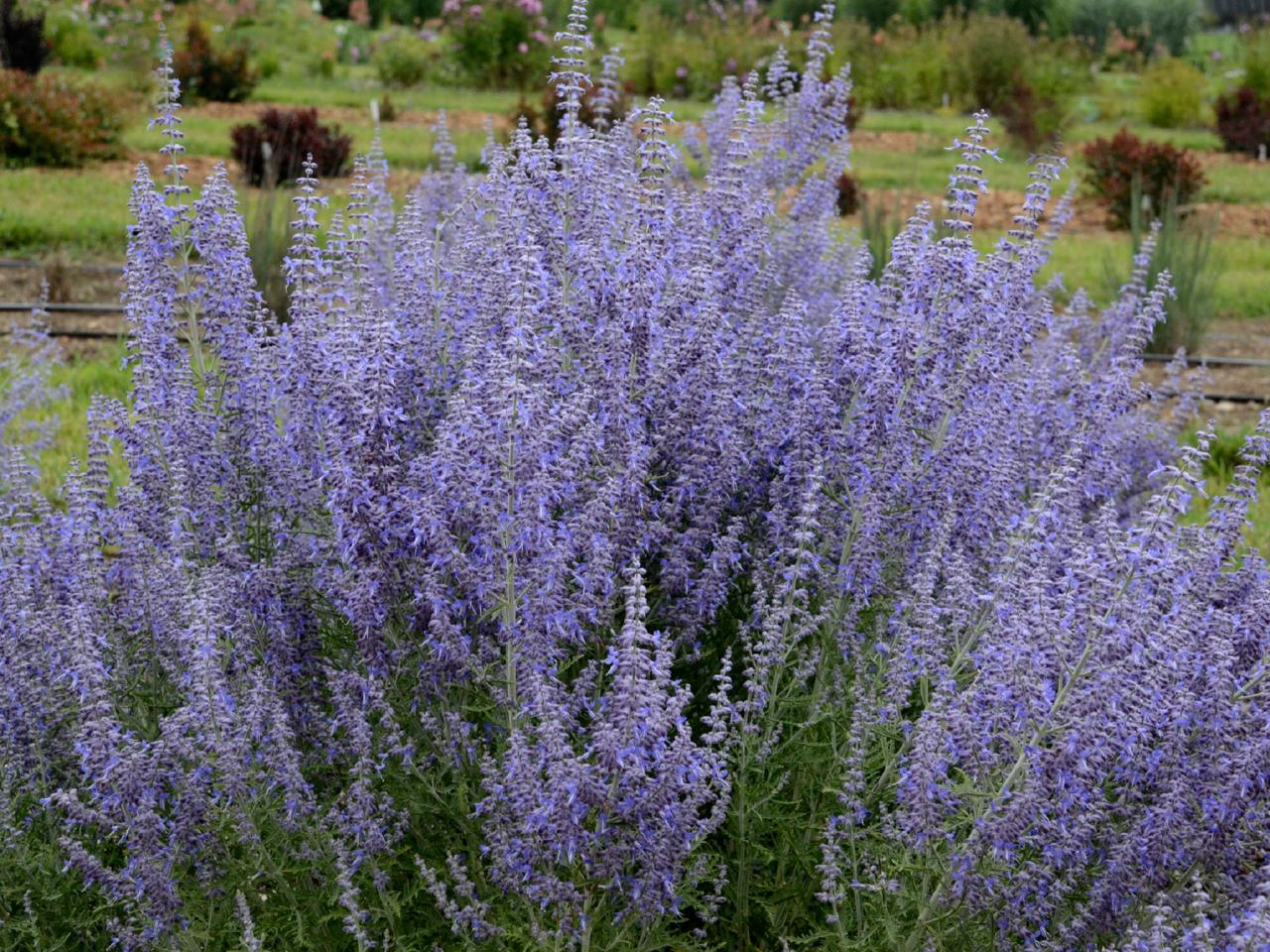 Source: hgtv.com
One aspect of russian sage care is pruning. Avoid planting in shade or overly fertile soils, which can cause it to droop and inhibit flowering. Both plants need plenty of sunlight and good drainage. Can i divide russian sage? Click to see full answer.
 Source: pinterest.es
More in extreme heat or containers. Water regularly during the first growing season to establish a deep root system. However, they do not have the same water requirements. Plants should be spaced about 18 inches from one another. It’s also important to know that russian sage won’t grow back at the tips of the plant after the winter, and the branches die back towards the bottom of the plant.
 Source: gardeningknowhow.com
In fact, russian sage thrives in dry soil and rarely needs watering once established. This is my favorite option for mature russian sage plants located at elevations under 7,000 feet. Russian sage (perovskia) is a very good plant for containers, especially large ones. It’s also important to know that russian sage won’t grow back at the tips of the plant after the winter, and the branches die back towards the bottom of the plant. One aspect of russian sage care is pruning.
 Source: pennlive.com
Russian sage can be transplanted into the garden as soon as the risk of frost has passed. Both plants need plenty of sunlight and good drainage. Easy care, extreme cold hardiness, improved pest and disease resistance, tolerates poor soils, waterwise, fast growing: Planting & caring for russian sage. Russian sage tolerates alkaline soil conditions and is an excellent choice for coastal gardens.
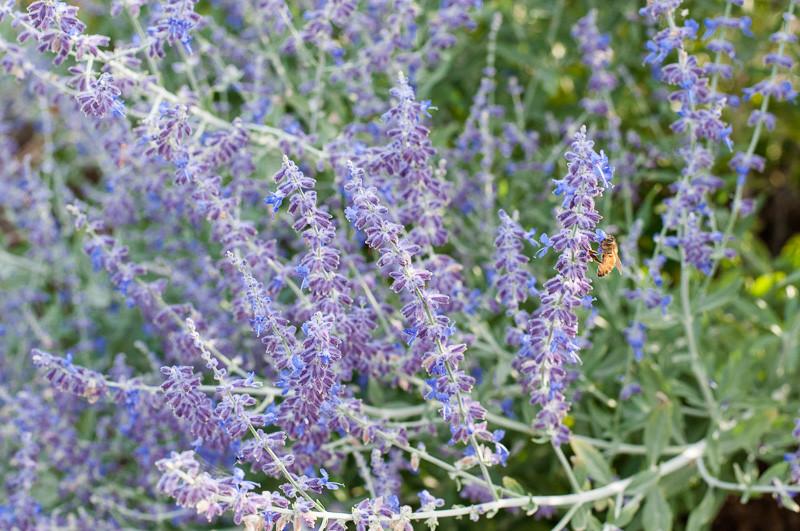 Source: gardenia.net
How to care for russian sage. Remove the top half of the stems if the plant stops blooming in summer. The second aspect is mulching for winter, which can help protect the plant in colder zones. In this article, we take a deep dive into the […] This encourages new growth and a fresh flush of flowers.
 Source: thespruce.com
Learn the two best techniques to cut back russian sage in spring. Propagate russian sage plants by dividing the clumps or. Russian sage tolerates alkaline soil conditions and is an excellent choice for coastal gardens. It is important to cut the foliage and stems back almost all the way to the soil in early spring, but leaving a few inches of growth above ground level. In warmer regions it may not die back much, if at all, during the winter months.
 Source: thespruce.com
Plants should be spaced about 18 inches from one another. Water needs russian sage prefers for the soil to dry out between waterings and should be watered regularly. When growing lavender and russian sage, keep in mind that these two plants require the same soil conditions. How to care for russian sage. If the stems are left intact for years, they become grey, old, overly woody and ultimately unsightly.
 Source: sylvangardenslandscape.com
Harden off seedlings or rooted cuttings before planting. Can i divide russian sage? But if you want to have a healthy blue steel russian sage at home, be sure to read on and follow our care guidelines. After plants become established, they tolerate drought without complaint and rarely need supplemental watering. If you don’t prune russian sage, the plant will become very overgrown and woody, which doesn’t look very nice.
 Source: pinterest.com
How to care for russian sage. Russian sage tolerates alkaline soil conditions and is an excellent choice for coastal gardens. This is usually a quick and easy task. If you don’t prune russian sage, the plant will become very overgrown and woody, which doesn’t look very nice. However, they do not have the same water requirements.
This site is an open community for users to share their favorite wallpapers on the internet, all images or pictures in this website are for personal wallpaper use only, it is stricly prohibited to use this wallpaper for commercial purposes, if you are the author and find this image is shared without your permission, please kindly raise a DMCA report to Us.
If you find this site adventageous, please support us by sharing this posts to your own social media accounts like Facebook, Instagram and so on or you can also bookmark this blog page with the title russian sage care by using Ctrl + D for devices a laptop with a Windows operating system or Command + D for laptops with an Apple operating system. If you use a smartphone, you can also use the drawer menu of the browser you are using. Whether it’s a Windows, Mac, iOS or Android operating system, you will still be able to bookmark this website.