Nursing care plan for sepsis information
Home » Trending » Nursing care plan for sepsis informationYour Nursing care plan for sepsis images are available in this site. Nursing care plan for sepsis are a topic that is being searched for and liked by netizens now. You can Download the Nursing care plan for sepsis files here. Find and Download all royalty-free photos.
If you’re looking for nursing care plan for sepsis images information connected with to the nursing care plan for sepsis topic, you have visit the ideal blog. Our site always provides you with hints for refferencing the highest quality video and image content, please kindly search and find more informative video content and images that match your interests.
Nursing Care Plan For Sepsis. 6 rows eating the right foods can boost the immune system. The care plan provides a template for generic protocols used in measuring clinical outcomes and documentation of patient assessment data related to neonatal sepsis. Sepsis nursing care plans,sepsis is a systemic response to infection; Nursing students must understand how protocols are used by physicians, nurses, and patients as a guide for treating pediatric basic procedures or illnesses.
 nursing 215 care plan 2 final Sepsis Shock (Circulatory) From scribd.com
So for this example sepsis care plan, we could write some nursing interventions such as: The infection can originate in many body parts, including the lungs, intestines, urinary tract, or skin. Administer antipyretic drugs if patient has fever as ordered: All the nursing interventions for puerperal sepsis have listed below: Reverse isolation/restric ti on of visitors may be needed to protect the immunosuppre ssed patient. Provide oral care by moistening lips & skin care by providing daily bath:
03_00_200 _ sepsis protocol • pediatric patients under the age of 21 years (refer to 26_37_010 _ nursing initiated protocol acetaminophen and ibuprofen administration pediatric) procedure:
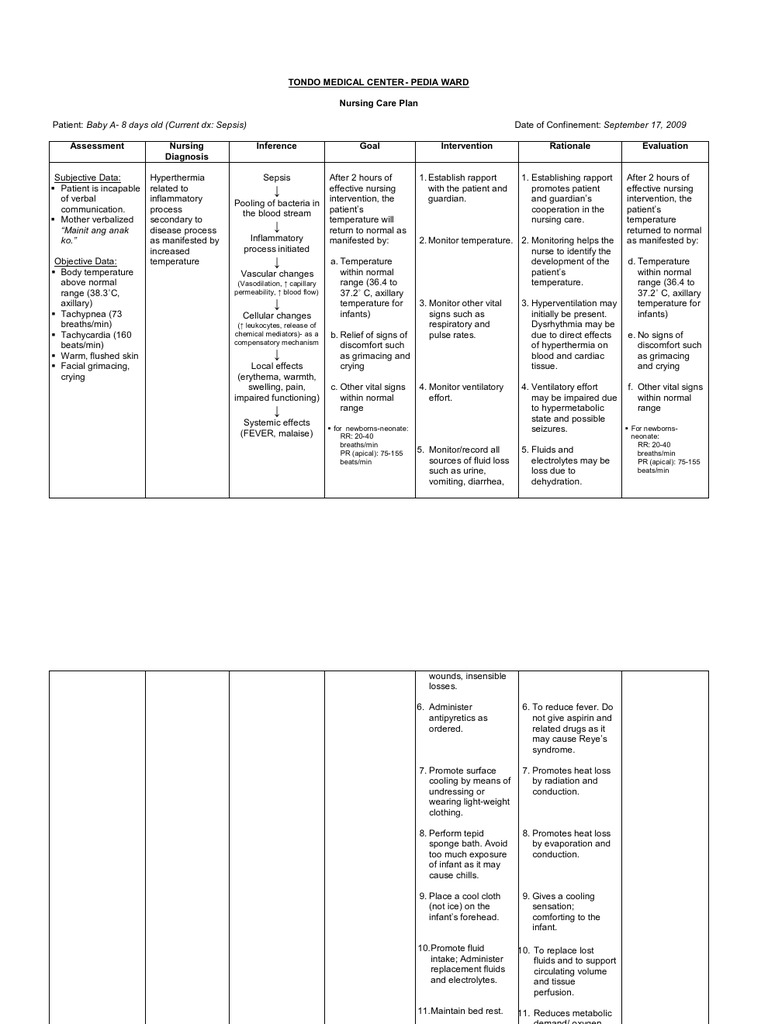
Nursing care plan ─ neonatal sepsis planning intervention rationale evaluati on body substance isolation (bsi) should be used for all infectious patients. Provide oral care by moistening lips & skin care by providing daily bath: Sepsis nursing care plans,sepsis is a systemic response to infection; The care plan provides a template for generic protocols used in measuring clinical outcomes and documentation of patient assessment data related to neonatal sepsis. Give a tepid sponge if a high fever present. Nursing care plan for sepsis sepsis is when the immune system responds to a serious infection by attacking the body�s own organs and tissues.
 Source: antimicrobe.org
Nursing care plan for sepsis sepsis is when the immune system responds to a serious infection by attacking the body�s own organs and tissues. 6 rows nursing diagnosis for sepsis nursing care plan for sepsis 1. This is also done to prevent the risk of developing sepsis in a patient with bacteremia and secondary infection. Synergy of patient and nurse has an important place in raising patient satisfaction. A bacterial infection anywhere in the body may set off the response that leads to sepsis
 Source: nurseslabs.com
Temperature of more than 38°c or less than 36°c, heart rate of more than 90 beats per minute, respiratory rate of more than 20 breaths per minute, paco 2 of below 32 mmhg, white blood. Septicemia implies the presence of an. A bacterial infection anywhere in the body may set off the response that leads to sepsis Nursing care plan for sepsis sepsis is when the immune system responds to a serious infection by attacking the body�s own organs and tissues. Nursing students must understand how protocols are used by physicians, nurses, and patients as a guide for treating pediatric basic procedures or illnesses.
 Source: scribd.com
A bacterial infection anywhere in the body may set off the response that leads to sepsis The infection can originate in many body parts, including the lungs, intestines, urinary tract, or skin. Assessment diagnosis inference planning intervention rationale evaluation. 03_00_200 _ sepsis protocol • pediatric patients under the age of 21 years (refer to 26_37_010 _ nursing initiated protocol acetaminophen and ibuprofen administration pediatric) procedure: Intake of protein, vitamins a, c, and e, and.
 Source: scribd.com
Assessment diagnosis inference planning intervention rationale evaluation. Risk for ♦ sepsis is a ♦ after 8 hours ♦ provide isolation ♦ body substance ♦ after 8 hours of. Synergy of patient and nurse has an important place in raising patient satisfaction. Nursing care plan ─ neonatal sepsis planning intervention rationale evaluati on body substance isolation (bsi) should be used for all infectious patients. Septicemia implies the presence of an.
 Source: nurseslabs.com
Nursing students must understand how protocols are used by physicians, nurses, and patients as a guide for treating pediatric basic procedures or illnesses. To prevent injury from dryness: Risk for ♦ sepsis is a ♦ after 8 hours ♦ provide isolation ♦ body substance ♦ after 8 hours of. In cases where the patient goes into septic shock, their blood pressures remains low even after receiving iv fluids so they need vasopressors to help bring up their blood pressure. Septicemia refers to the active multiplication of bacteria in the bloodstream that results in an overwhelming infection.
 Source: scribd.com
We are on the frontline in the care of the hospitalized patient. To treat the underlying infection with broad spectrum antibiotics, then switch with the type of antibiotics to which the causative bacteria are sensitive. 6 rows nursing diagnosis for sepsis nursing care plan for sepsis 1. All the nursing interventions for puerperal sepsis have listed below: Intake of protein, vitamins a, c, and e, and.
 Source: sameapk.com
Septicemia refers to the active multiplication of bacteria in the bloodstream that results in an overwhelming infection. Temperature of more than 38°c or less than 36°c, heart rate of more than 90 beats per minute, respiratory rate of more than 20 breaths per minute, paco 2 of below 32 mmhg, white blood. The infection can originate in many body parts, including the lungs, intestines, urinary tract, or skin. Septicemia refers to the active multiplication of bacteria in the bloodstream that results in an overwhelming infection. This training module overviews sepsis, its pathophysiology, signs and symptoms, and treatment within the context of skilled nursing and long term care (ltc).
Source: scribd.com
Early identification and treatment are the cornerstone of sepsis management. Early recognition and appropriate management of a patient with sepsis saves lives. Annually, the rate of this debilitating condition is rising by almost 9%. We are on the frontline in the care of the hospitalized patient. Nursing care plan for sepsis sepsis is when the immune system responds to a serious infection by attacking the body�s own organs and tissues.
 Source: sameapk.com
Temperature of more than 38°c or less than 36°c, heart rate of more than 90 beats per minute, respiratory rate of more than 20 breaths per minute, paco 2 of below 32 mmhg, white blood. Intake of protein, vitamins a, c, and e, and. Nursing students must understand how protocols are used by physicians, nurses, and patients as a guide for treating pediatric basic procedures or illnesses. Administer iv fluid replacement as ordered: Assessment diagnosis inference planning intervention rationale evaluation.
 Source: scribd.com
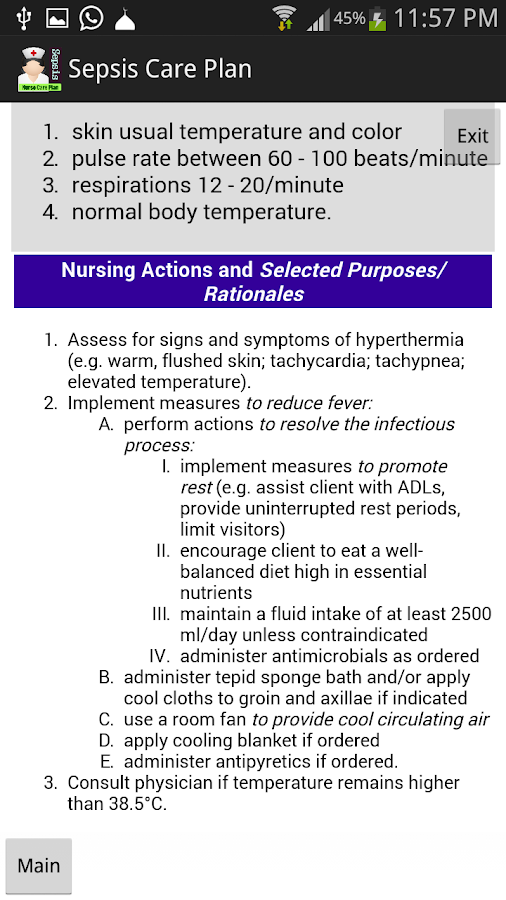
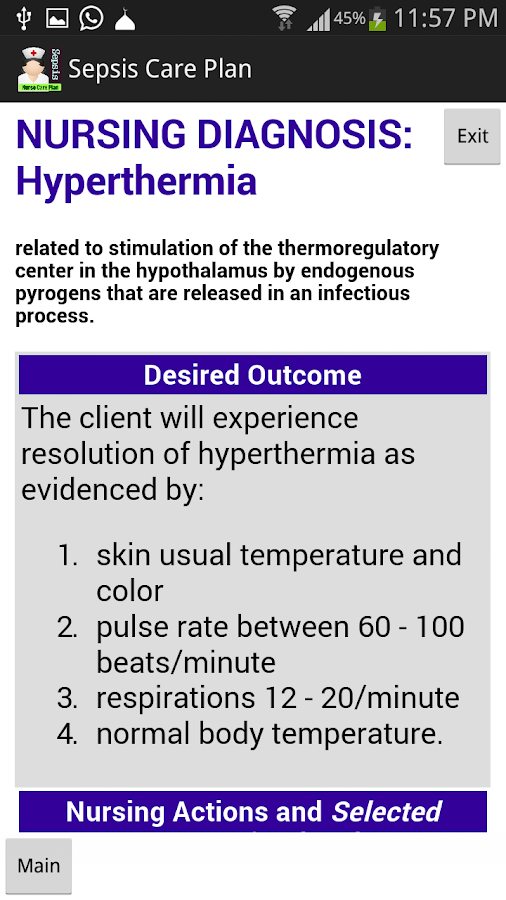
Patients hospitalized with sepsis are eight times more likely to die during hospitalization (hall et al., 2011). “the nurse will draw labs and take blood cultures.” “the nurse will assess the patient’s vital signs frequently (per facility policy).” “the nurse will give fluids as prescribed.” “the nurse will give vasopressors, oxygen, and other medications as prescribed.” Septicemia implies the presence of an. Synergy of patient and nurse has an important place in raising patient satisfaction. Reverse isolation/restric ti on of visitors may be needed to protect the immunosuppre ssed patient.
 Source: slidedocnow.blogspot.com
03_00_200 _ sepsis protocol • pediatric patients under the age of 21 years (refer to 26_37_010 _ nursing initiated protocol acetaminophen and ibuprofen administration pediatric) procedure: A bacterial infection anywhere in the body may set off the response that leads to sepsis Septicemia refers to the active multiplication of bacteria in the bloodstream that results in an overwhelming infection. In cases where the patient goes into septic shock, their blood pressures remains low even after receiving iv fluids so they need vasopressors to help bring up their blood pressure. Healthcare personnel in skilled nursing facilities play a significant role in early identification and treatment of sepsis.
 Source: pinterest.com
The rcn recognises the importance of the identification, management and prevention where possible of sepsis. Early identification and treatment are the cornerstone of sepsis management. Sepsis nursing care plans,sepsis is a systemic response to infection; Nurses play a fundamental role in detecting changes in physiological observations that could indicate the onset of sepsis. Nursing care plan ─ neonatal sepsis planning intervention rationale evaluati on body substance isolation (bsi) should be used for all infectious patients.
 Source: straightanursingstudent.com
Administer iv fluid replacement as ordered: 03_00_200 _ sepsis protocol • pediatric patients under the age of 21 years (refer to 26_37_010 _ nursing initiated protocol acetaminophen and ibuprofen administration pediatric) procedure: Risk for ♦ sepsis is a ♦ after 8 hours ♦ provide isolation ♦ body substance ♦ after 8 hours of. Provide oral care by moistening lips & skin care by providing daily bath: 6 rows nursing diagnosis for sepsis nursing care plan for sepsis 1.
 Source: slidedocnow.blogspot.com
Intake of protein, vitamins a, c, and e, and. Annually, the rate of this debilitating condition is rising by almost 9%. This is also done to prevent the risk of developing sepsis in a patient with bacteremia and secondary infection. Screening for sepsis as part of a Nursing students must understand how protocols are used by physicians, nurses, and patients as a guide for treating pediatric basic procedures or illnesses.
 Source: scribd.com
Early recognition and appropriate management of a patient with sepsis saves lives. Iv fluids are key to treating sepsis. Reduces risk of cross contamination because gloves may have noticeable defects, get torn or ♦ after 8 hours of nursing interventions, the patient will achieve timely healing and free from further infection. A bacterial infection anywhere in the body may set off the response that leads to sepsis
 Source: scribd.com
Administer iv fluid replacement as ordered: Monitor vital sing carefully and keep accurate records (note the presence of chills or reports of anorexia or malaise). This is also done to prevent the risk of developing sepsis in a patient with bacteremia and secondary infection. Annually, the rate of this debilitating condition is rising by almost 9%. 03_00_200 _ sepsis protocol • pediatric patients under the age of 21 years (refer to 26_37_010 _ nursing initiated protocol acetaminophen and ibuprofen administration pediatric) procedure:
 Source: pinterest.com
Iv fluids are key to treating sepsis. Boluses will be given first, and then maintenance fluids in attempt to keep the organs perfused. Patients hospitalized with sepsis are eight times more likely to die during hospitalization (hall et al., 2011). This is also done to prevent the risk of developing sepsis in a patient with bacteremia and secondary infection. Reverse isolation/restric ti on of visitors may be needed to protect the immunosuppre ssed patient.
 Source: pinterest.com
The patient is also on neutropenic precaution. ♦ after 8 hours of nursing interventions, the patient will achieve timely healing and free from further infection. Nursing care plan helping nurses, students / professionals, creating ncp in different areas such as medical surgical, psychiatric, maternal newborn, and pediatrics. So for this example sepsis care plan, we could write some nursing interventions such as: The incidence of sepsis and severe sepsis have risen over the past decade from approximately 600,000 to over 1,000,000 hospitalizations per year from 2000 through 2008.
This site is an open community for users to do sharing their favorite wallpapers on the internet, all images or pictures in this website are for personal wallpaper use only, it is stricly prohibited to use this wallpaper for commercial purposes, if you are the author and find this image is shared without your permission, please kindly raise a DMCA report to Us.
If you find this site beneficial, please support us by sharing this posts to your favorite social media accounts like Facebook, Instagram and so on or you can also save this blog page with the title nursing care plan for sepsis by using Ctrl + D for devices a laptop with a Windows operating system or Command + D for laptops with an Apple operating system. If you use a smartphone, you can also use the drawer menu of the browser you are using. Whether it’s a Windows, Mac, iOS or Android operating system, you will still be able to bookmark this website.